

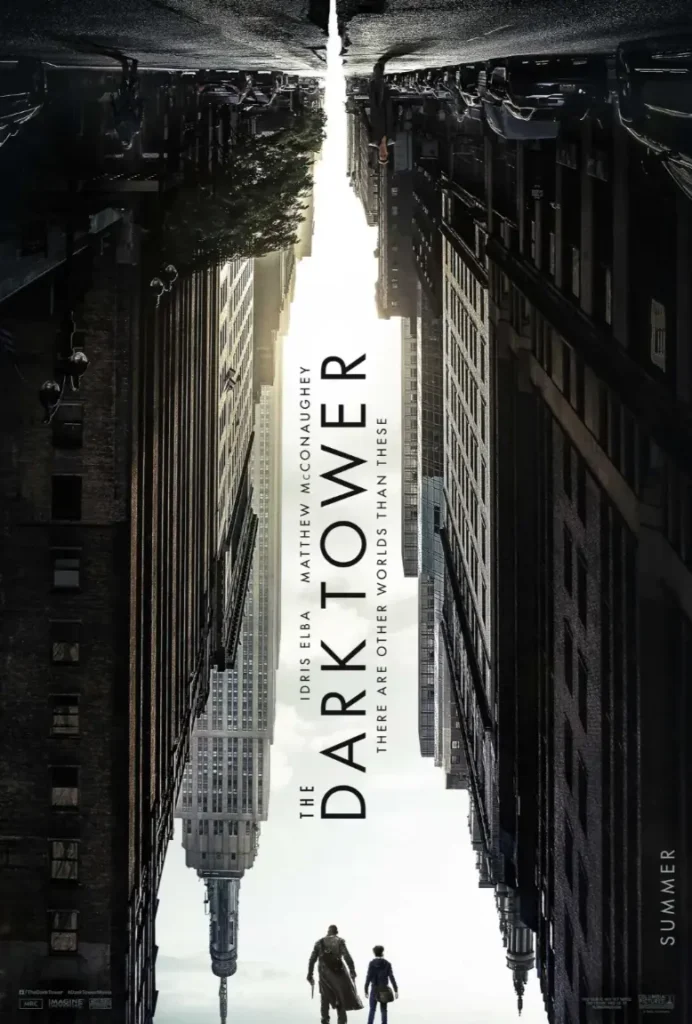
I have been reading Stephen King since I was probably way too young to be reading him. My older cousin gave me a beat-up copy of Salem’s Lot when I was 11 or 12, I guess, and I remember staying up until 3 am reading it with all the lights on in my room. But it wasn’t until a few years back, when I actually dove into Stephen King Dark Tower series, that I realized something absolutely wild about King’s work.
Nearly everything he’s written in the past five decades exists within the same universe.
Everything.
The Tower Holds It All Together
So, the thing about The Dark Tower that blew my mind: it is not just some fantasy series where some dude goes on a quest to save the world. Quite literally, the Tower is an axle that keeps all of King’s worlds spinning, holding the entire multiverse together. Without it, Derry where Pennywise terrorizes kids just collapses into nothing. Castle Rock vanishes. That post-apocalyptic wasteland from The Stand ceases to exist.
Roland Deschain, the last gunslinger, he spends eight books chasing this Tower. King started writing this in 1970 when he was still teaching high school and didn’t finish it until 2004. That’s like 34 years of his life dedicated to this one story. King himself calls it his Jupiter, the planet that dwarfs everything else he’s ever written.
But Roland’s journey through Mid-World? That’s just scratching the surface of how deep this rabbit hole goes.
Characters Literally Jump Between Books
The connections aren’t some subtle Easter eggs which one needs to squint to see. King literally moves his characters between different books like they are traveling through doors leading to other dimensions.
Take Father Donald Callahan from Salem’s Lot. In 1975 we watched this alcoholic priest lose everything when he faced down the vampire Kurt Barlow in Jerusalem’s Lot, Maine. Barlow forces him to drink his blood, thus marking him but not fully turning him into vampire. The book ends with Callahan fleeing town in complete shame, broken and defeated.
For almost three decades after, we had absolutely no idea what happened to him after he left that town.
Then along comes Wolves of the Calla in 2003, and all of a sudden, there’s Callahan living in some village called Calla Bryn Sturgis in Roland’s world, fighting alongside gunslingers against these weird robot wolves that steal children. After fleeing Salem’s Lot, he ended up in New York City, became homeless vagrant, and somehow developed this ability to sense vampires around him. He spent years hunting them in the shadows before the Crimson King’s forces eventually pushed him through doorway into Mid-World.
But that’s where it gets really meta and mind-bending. In the Dark Tower books, Callahan finds an actual copy of the Salem’s Lot novel. About which he is a major character. Just imagine finding a novel about your life that was written by some dude named Stephen King who lives in another dimension. That’s some Inception level stuff right there.
His final sacrifice in Song of Susannah taking on an entire horde of vampires to save Roland and his friends gave him the redemption arc he never got in Salem’s Lot. His last words to Roland were, “May you find your Tower, Roland, and breach it, and may you climb to the top!” The damned priest who lost his faith finally found it again before the end.
Randall Flagg Just Won’t Stay Dead
If there is any one character who proves that shared universe absolutely exists, it is Randall Flagg. The guy has more names and identities than a spy with a dozen fake passports. The Man in Black, Walter O’Dim, Marten Broadcloak, the Walkin’ Dude, the Dark Man, and probably a few more I am forgetting.
Flagg is the main antagonist of The Stand, gathering all the worst folks in post apocalyptic Las Vegas to go to war against the good survivors in Boulder. Then he appears again in The Eyes of the Dragon as an evil wizard manipulating a kingdom. And throughout Roland’s quest, he keeps on popping up as an obstacle, trying to stop the gunslinger from reaching the Tower.
King uses Flagg to thread everything together across novels and timelines. At one point, Roland’s ka-tet travels through a doorway that drops them right into Topeka, Kansas. But it isn’t just any Topeka; it’s the same Topeka from the universe in The Stand, completely ravaged by the superflu everyone called Captain Trips. Everywhere, they see graffiti of Flagg’s symbols, Mother Abagail’s messages, and the Crimson King’s mark. Different worlds, same cosmic players moving the pieces.
Flagg’s entire story is on loop that he cannot get out from. The expanded edition of The Stand includes that epilogue where Flagg wakes up on the beach, reflecting on how life is a wheel in constant motion, always ending back where it started. Sound familiar? Well, that is pretty much what happens with Roland right at the very end of The Dark Tower series: he reaches the top of the Tower, opens that final door, and gets thrown all the way back to the beginning of his quest in the desert.
The two of them, each trapped in their own cycles that neither can escape. Ka is a wheel, and the wheel keeps on turning.
Pennywise and the Cosmic Turtle
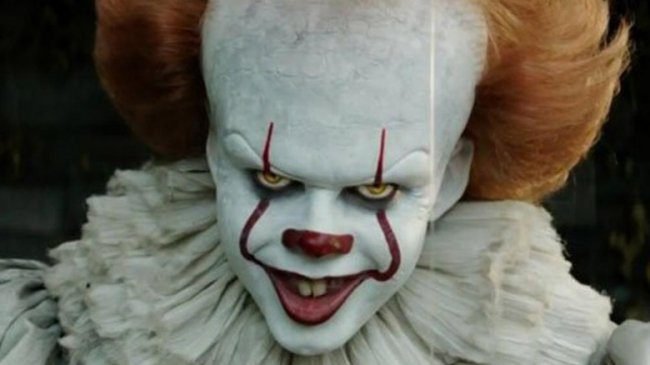
IT is not just a story about some killer clown terrorizing kids in some small town in Maine. If you dig deeper into the lore, the natural enemy of Pennywise is this cosmic turtle deity named Maturin, and this turtle is one of the twelve Guardians of the Beams that’s literally holding up the Dark Tower itself.
The creature that becomes Pennywise exists in something called the Macroverse, this chaotic space between all the countless worlds in King’s multiverse. When Bill Denbrough fights IT in the book during that ritual of Chüd, he’s getting help from cosmic turtle that’s part of the actual architecture holding all of reality together. It’s way bigger and more cosmic than what we saw in the movies.
And apparently, the new HBO series It- Welcome to Derry is going all-in on this connection to the Dark Tower. According to some interview, director Andy Muschietti has stated, “Everything that is on the other side, it’s connected to the Dark Tower because it’s the same universe, the macroverse.” I really hope they actually explore more of the cosmic horror side of IT in this show because the movies only scratched the surface of how terrifyingly vast Pennywise’s true nature really is.
The Numbers, The Towns, All The Details
King is obsessed with certain recurring elements throughout all of his work. The number 19 shows up constantly in the Dark Tower series and bleeds into his other books. Derry and Castle Rock appear over and over, these cursed Maine towns where supernatural incidents just keep happening no matter what. There’s “thinnies,” which are weak spots in reality where the fabric between worlds has worn so thin you can sometimes hear sounds from other dimensions bleeding through.
Even the very idea of “ka-tet,” which roughly translates to “one made from many”: a group of people brought together through destiny or higher powers. It shows up in IT with the Losers Club, in The Stand with the Boulder survivors, throughout other novels even when King does not use that specific term.
Why Stephen King Dark Tower Matters Across All Stories
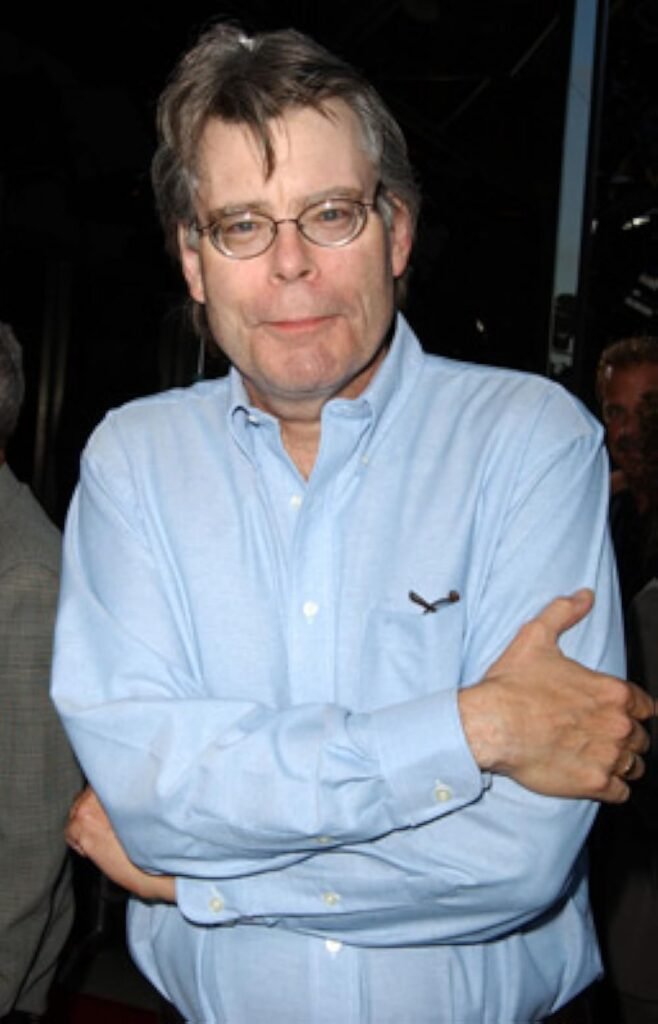
What Stephen King created over his whole career is something pretty unique in modern fiction: the literary multiverse where a priest from a vampire novel becomes a gunslinger in western fantasy, where a post-apocalyptic villain is the same ancient demon who, some centuries prior, had seduced that gunslinger’s mother. Where the killer clown and a cosmic turtle all belong to the same ecosystem of Guardians and Demons fighting over the fate of reality itself.
King has said in interviews that there’s a place for all his characters somewhere in Mid-World or the worlds that touch it. From Randall Flagg to Ralph Roberts from Insomnia, from Ted Brautigan, who shows up in Hearts in Atlantis, to Dinky Earnshaw. It is all eventually connected back to that Tower standing at the center of all existence, keeping the Beams from breaking and reality from collapsing.
The Dark Tower isn’t only King’s longest single work or his most ambitious fantasy series. It’s the secret thread that’s run through fifty years of his storytelling the answer to questions we didn’t even know we should ask when we first read Carrie or watched The Shining.
But once you know that all these stories exist in the same multiverse that every Stephen King book you pick up might have some hidden door leading to Roland’s world or mention of the Crimson King or a reference to the Dark Tower itself? well, it just makes every reread feel completely different. You start noticing things you missed before, the connections you never saw.
Ka is a wheel and once you actually see how it all connects together, you can’t unsee it. The rabbit hole goes so much deeper than you think.
So yeah, if you haven’t read The Dark Tower series yet and you’re a fan of King’s work, I’d say it is absolutely essential. It changes the way you look at everything else he’s written. Fair warning, though: it’s a long journey, and some of the middle books can feel quite slow; but the payoff for understanding this massive interconnected universe is totally worth it.
Long days and pleasant nights, and may you find your Tower.