

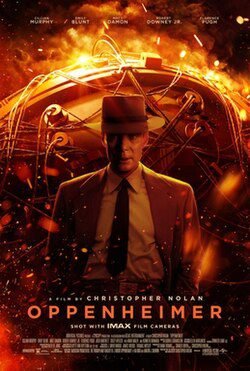
Oppenheimer 2023 Explained: Christopher Nolan’s Oppenheimer is not your typical historical drama. It’s like stepping into the mind of a genius who is constantly torn between discovery and destruction. You watch, and it’s thrilling, but also heavy. And honestly? It sticks with you. Days after, you might catch yourself thinking, “How could one person carry so much responsibility?”
For anyone who’s seen the movie and felt a little dizzy from the jumps between courtroom hearings, lab sequences, and personal flashbacks, this guide is for you. Let’s break down the story, the ending, the symbolism, and even some hidden meanings Nolan snuck in.
The Story – More Than a History Lesson
At first glance, the movie follows J. Robert Oppenheimer and the development of the atomic bomb. But Nolan doesn’t want to hand it to you in a neat timeline. No, he jumps around. You have flashbacks to Oppenheimer as a young scientist. Then, suddenly, courtroom hearings. Then, intimate personal moments with family and colleagues.
It’s kind of disorienting. You’re piecing together the narrative, just like the characters piece together the bomb’s construction. But that’s intentional. It mirrors Oppenheimer’s mental state, his mind bouncing between brilliance, obsession, and guilt.
You see him deep in thought one moment, running calculations, and the next, he’s being grilled by officials about moral responsibility. It’s like watching a man juggle multiple timelines of his life simultaneously. And honestly? It’s mesmerizing.
The Ending – What Actually Happens
Let’s be real. The ending is confusing if you’re expecting a neat bow. But that’s the point.
Oppenheimer walks out of the hearings, a mixture of pride and guilt written all over his face. He did something monumental. But the moral weight is crushing. And Nolan doesn’t tell you, “this is right” or “this is wrong.” He leaves it reflective.
And that’s what makes it powerful. You leave the theater asking yourself: Would I have done the same thing? Could anyone bear this kind of burden?
It’s less about closure and more about lingering questions. That moral tension is “what did he do versus what could have happened?” is what sticks.
Symbolism You Might Have Missed
Nolan doesn’t hide his symbols. But they’re subtle. You have to look a bit closer.
1. The Trinity Test
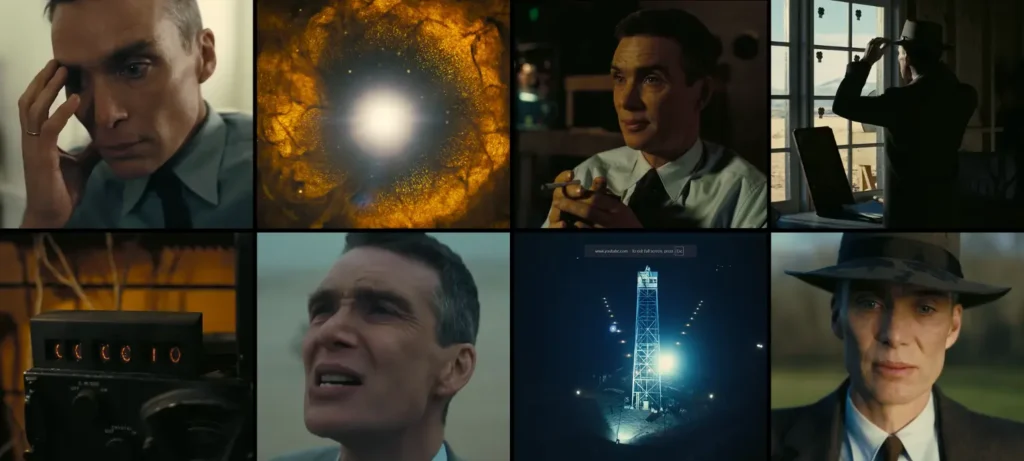
The first atomic bomb detonation is jaw dropping. The blinding light, the mushroom cloud, the stunned scientists. It’s awe and terror rolled into one. And yes, it’s historical, but also metaphorical. Human brilliance and destruction are inseparable. You can’t have one without the other.
2. Clocks and Timers
Everywhere you look, pendulums, watches, countdowns. On one level, it’s period detail. On another, it’s a ticking moral clock. Oppenheimer’s decisions come with consequences, and every second counts. You feel it.
3. Mirrors and Reflections
You might notice mirrors appear in odd places. Sometimes Oppenheimer stares at himself, and for a split second, the reflection seems more real than the man himself. It’s a visual shorthand for inner conflict. It’s almost like the audience is peeking into his soul.
4. Fire and Light
Flames, sparks, explosions they’re everywhere. Creation and destruction. It’s weird, but it works. Every lab experiment, every test, every explosion doubles as a metaphor for human ingenuity and its potential for catastrophe.
Hidden Meanings – Look Closer
Here’s where Nolan gets really clever:
- Ethics in Science: The movie keeps asking, without words, whether progress justifies potential harm. Oppenheimer is brilliant, but that brilliance comes with moral peril.
- Legacy vs. Guilt: Greatness has baggage. Nolan emphasizes that no achievement is free of consequences.
- Sound Design: The low rumble during bomb tests? That’s not just for effect. It’s anxiety you can feel in your chest.
- Tiny Visual Clues: A shadow here, a lingering close up there they hint at inner turmoil. Even a second viewing reveals something new.
Honestly, it’s like Nolan designed this film to reward careful watching. Miss one beat, and you might not catch the moral undertones.
J. Robert Oppenheimer – A Human Study
Cillian Murphy is quietly brilliant as Oppenheimer. He doesn’t overact. He doesn’t need to. You feel the weight of the world in his gaze.
- Obsessive Genius: Constantly calculating, constantly thinking. He’s consumed by his work.
- Moral Conflict: Pride and horror coexist in every scene. He’s thrilled to create but terrified by the consequences.
- Human Vulnerability: Intimate moments reveal doubts, isolation, and fear. He’s not invincible he’s painfully human.
Murphy’s subtle performance makes Oppenheimer relatable. You feel his excitement, guilt, and inner conflict. It’s exhausting in the best way.
Cinematic Techniques – Feeling History
Nolan doesn’t rely on CGI alone. He uses practical effects and framing to immerse you:
- Non-linear Storytelling: Flashbacks reflect Oppenheimer’s chaotic mindset.
- IMAX & Close-Ups: Explosions feel massive. Quiet personal scenes hit emotionally.
- Ludwig Göransson’s Score: Music flows with the tension, helping you feel awe and anxiety simultaneously.
Watching the movie feels like you’re riding a wave of history, emotion, and morality all at once.
Why Oppenheimer Resonates Today
The story isn’t just about the past. It raises questions we still ask:
- How far should ambition go?
- Can progress justify harm?
- What is the human cost of genius?
Whether it’s AI, nuclear technology, or breakthroughs in science, the dilemmas in the movie feel contemporary. It’s a reminder that the past is never really past.
Oppenheimer 2023 Explained: Final Thoughts
Oppenheimer is more than a historical movie. It’s about ambition, ethics, and human responsibility. Its ending leaves you thinking. Its symbolism rewards multiple viewings. Murphy’s performance makes it deeply personal.
It’s cinematic brilliance that hits emotionally, intellectually, and morally. You might leave the theater a little shaken, maybe a little inspired. And really, isn’t that the point?
⭐ MovieSharp Rating: 9.5/10 A must watch for anyone who loves history, morality, and cinema that sticks with you.
Watch the official trailer here now!